
FUTURE FOR FISH RESEARCH GRANTS
EVIDENCE TO IMPACT
We support academic research addressing key questions in fish welfare
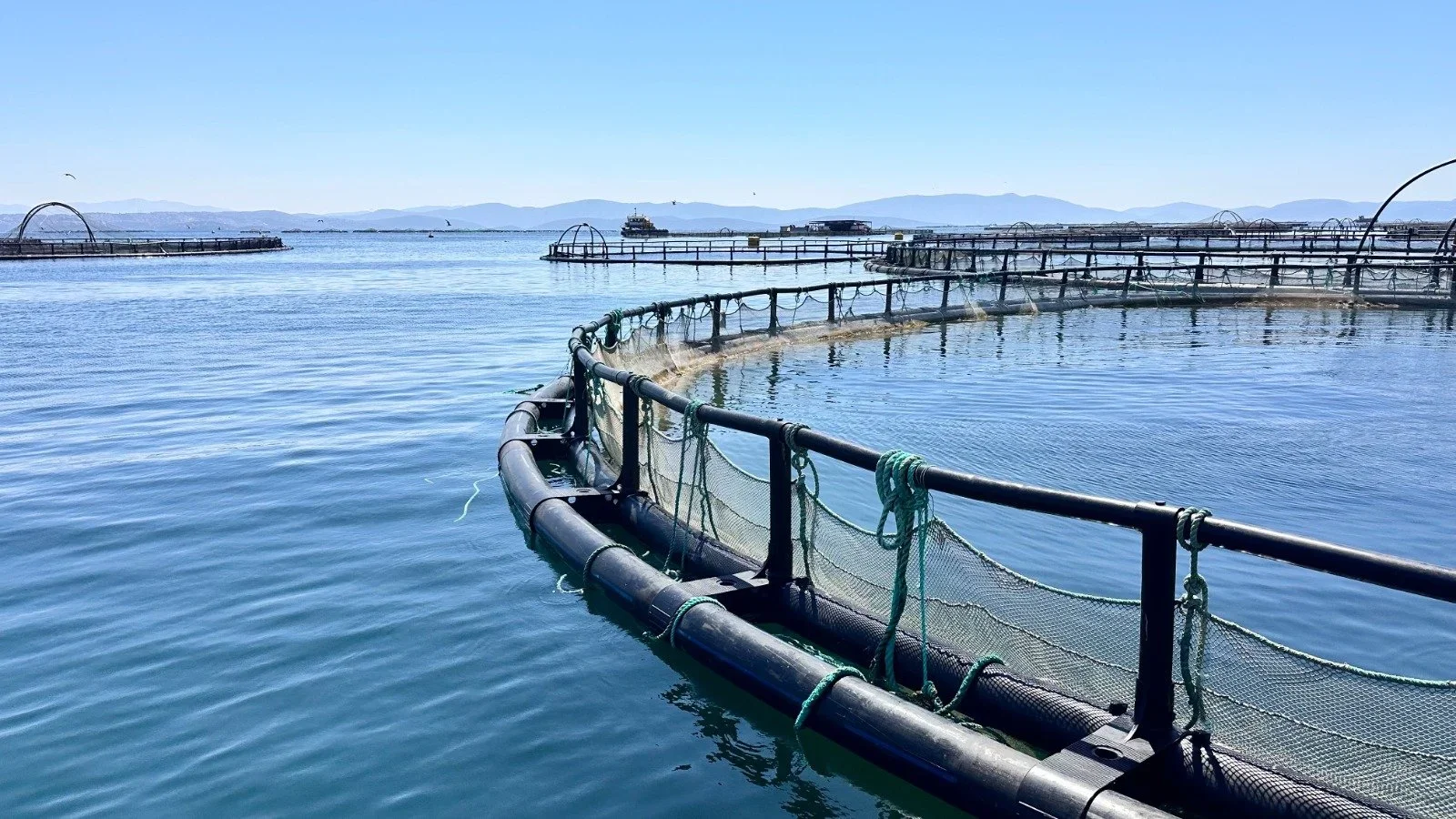
In recent years, fish welfare has gained increasing importance in both scientific research and aquaculture practices. There is a growing body of scientific evidence that fish are sentient beings capable of experiencing pain, stress and negative emotions. Although Türkiye is one of the world's leading producers of European sea bass and gilthead sea bream, academic research on fish welfare remains limited. To help address this gap and strengthen the scientific evidence base for fish welfare in Türkiye, Future For Fish provides research grants to support applied academic projects that advance our understanding of fish welfare and contribute to practical improvements in the aquaculture sector.


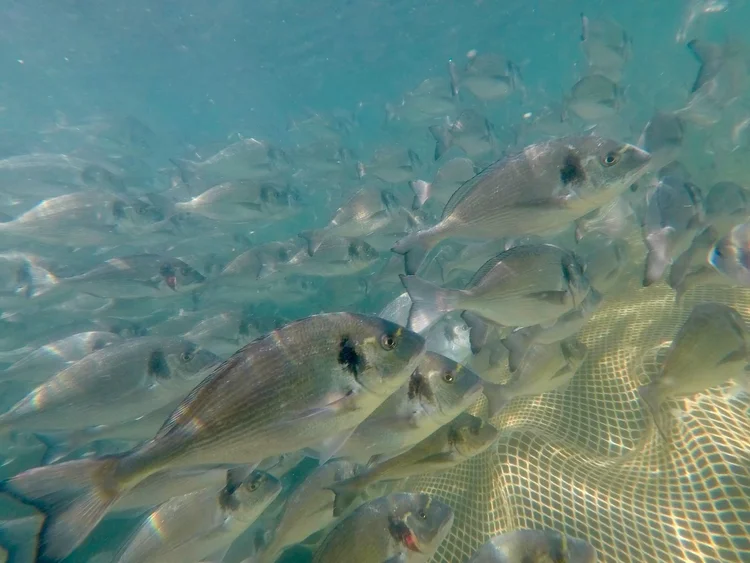
Environmental Enrichment
We welcome proposals investigating interventions that enhance the rearing environment of farmed fish, including structural, sensory, social, and management-based enrichment. Projects may examine impacts on behaviour, welfare, stress, health, cognition, resilience, or other relevant welfare indicators.
Key Studies:
Key Studies:
- Arechavala-Lopez et al. (2022). Environmental enrichment in fish aquaculture: A review of fundamental and practical aspects. Reviews in Aquaculture.
- Cabrera-Álvarez et al. (2024). Environmental enrichment reduces the effects of husbandry stressors in gilthead seabream broodstock.Aquaculture Reports.
- Arechavala-Lopez et al. (2020). Enriched environments enhance cognition, exploratory behaviour and brain physiological functions of Sparus aurata. Scientific Reports.
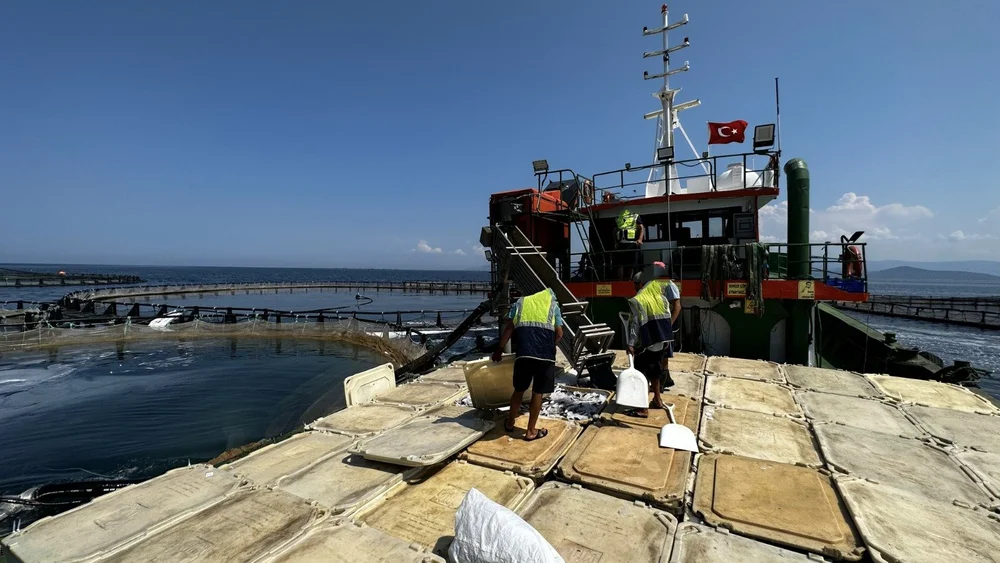
Harvest
We welcome proposals investigating interventions that improve fish welfare during harvesting, stunning, slaughter, and related pre-slaughter procedures. Projects may examine loss of consciousness, stress responses, pain perception, humane stunning and killing methods, operational feasibility, implementation at commercial scale, or other relevant welfare indicators.
Key Studies:
Key Studies:
- de la Rosa et al. (2021). Twenty years of research in seabass and seabream welfare during slaughter. Animals.
- Brijs et al. (2025). Effects of electrical and percussive stunning on neural, ventilatory and cardiac responses of rainbow trout. Aquaculture.
- Villarroel & Lambooij (2022). Fish. In Preslaughter handling and slaughter of meat animals Wageningen Academic Publishers.
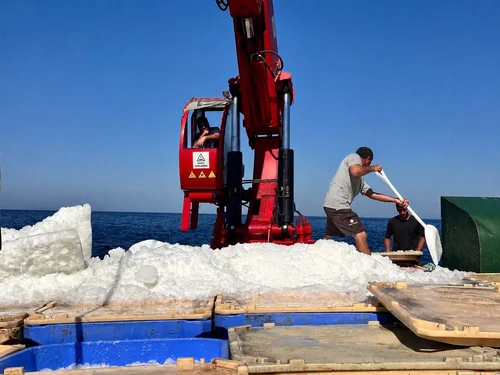
Climate and Temperature Stress
We welcome proposals investigating the impacts of climate change and rising water temperatures on fish welfare. Projects may examine heat stress, reduced dissolved oxygen levels, disease susceptibility, or other relevant welfare indicators.
Key Studies:
Key Studies:
- Cascarano et al. (2021). Mediterranean aquaculture in a changing climate: Temperature effects on pathogens and diseases of three farmed fish species. Pathogens.
- Barange et al. (2018). Impacts of climate change on fisheries and aquaculture: Synthesis of current knowledge, adaptation and mitigation options. FAO.
- Kirsch (2020). Climate change, aquaculture, and fish welfare. Fish Welfare Initiative.
GRANT CATEGORIES
Fish welfare, based on the recognition that fish are sentient beings, encompasses their physical health, fulfilment of their natural behavioural needs, and protection from stress, pain or negative experiences. Within this framework, academic research that contributes to understanding, measuring, or improving fish welfare will be supported. Studies focusing on sea bass (Dicentrarchus labrax), gilthead seabream (Sparus aurata) and rainbow trout (Oncorhynchus mykiss) will be prioritised. Applications should be clearly and directly linked to at least one of the three main topics listed below.

WHO CAN APPLY?
Applications must be submitted through an institution with legal personality. Universities, research institutes, non-governmental organizations, and similar institutions with the capacity to conduct research may apply to this call.
The project leader must have an official affiliation with the institution to which the application is submitted. Applications from graduate students and early-career researchers will also be considered; however, these applications are expected to be submitted through the applicant’s affiliated institution and with the support of an academic advisor or the relevant department.

To be eligible for funding, applications must meet all of the following conditions.
APPLICATION ELIGIBILITY CRITERIA
-
![]()
Applicants
The project leader must be employed by a university, research institute, civil society organization, or a similar institution with the capacity to conduct research.
The project leader is expected to have a resume demonstrating the ability to manage the proposed project and funding.
The project coordinator must hold at least a Ph.D.
If the project includes a postgraduate thesis, the principal investigator must be the student’s academic supervisor.
Collaborations with international researchers, industry representatives, or other relevant stakeholders are encouraged but not required.
-
![]()
Project Scope
The project must focus directly on the welfare of farmed fish or establish a clear and meaningful link to the welfare of farmed fish.
The project is expected to contribute to at least one of the priority research areas specified in the call.
The project must include at least one of the target species specified in the call.
The research must have a clearly defined objective, research question, and methodology.
The project must be feasible within the proposed budget and timeframe.
-
![]()
Ethical and Legal Requirements
Applicants are required to comply with all relevant legal, ethical, and institutional requirements.
Where applicable, all required ethics approvals must be obtained from the relevant ethics committees before project activities begin. Applicants who have not yet obtained these approvals should demonstrate that they will be secured prior to project commencement.
For studies involving animals, applicants must clearly demonstrate that animal welfare will be protected throughout the project and that any potential harm will be minimized in accordance with applicable ethical standards and the principles of humane research.
-
![]()
Projects Not Eligible for Funding
Projects where the primary objective is to increase production efficiency, growth rate, or profitability, and which view animal welfare only as a secondary outcome.
Studies that fail to demonstrate a measurable welfare outcome or a reasonable pathway toward welfare.
Projects with no direct connection to the fish species or fish farming in Türkiye.
Projects that have already been completed or fully funded by another source.
Projects that propose procedures likely to cause unnecessary harm, suffering, or death to animals without appropriate scientific and ethical justification are not eligible for funding.

OUR SELECTION CRITERIA
Scope
Scope refers to the approximate number of animals that could potentially benefit if a project’s findings are successfully implemented.
As an organization dedicated to improving the welfare of farmed fish, we prioritize projects with strong potential to generate meaningful, real-world welfare improvements. We particularly value research that can inform or influence aquaculture practices, management systems, welfare assessment methodologies, or the development and adoption of evidence-based welfare interventions.
As an association, we are particularly interested in research that addresses significant knowledge gaps in sea bass, sea bream, and trout species and that could contribute to future welfare improvements in commercial production systems.
Although applications addressing well-researched topics are accepted, priority will be given to projects addressing knowledge gaps in sea bass, sea bream and trout aquaculture. This includes questions that have not been sufficiently researched, or that have the potential to offer new scientific and practical contributions.
The following factors will be considered during the evaluations of the proposals:
The number of fish that could ultimately benefit from the research,
The likelihood that the research findings will lead to practical, measurable improvements in fish welfare,
The potential for the research outcomes to be adopted, implemented, and disseminated within the aquaculture industry,
The relevance of the proposed research to significant fish welfare challenges in aquaculture,
The extent to which the project addresses identified knowledge gaps and priority research needs for the target species;
The scientific originality of the research and its contribution to the existing literature;
The potential of the research outputs to serve as a foundation for long-term, sustainable welfare improvements.

IMPACT
Impact refers to the likelihood that a project will contribute to meaningful improvements in fish welfare and the magnitude of such improvements.
We recognize that the impact of research is not always immediate or direct. Research may improve fish welfare by advancing scientific understanding, informing aquaculture practices, developing welfare assessment methods, identifying new welfare indicators, shaping future research priorities, or supporting the development of policies, standards, and industry guidance. Therefore, the impact of the research is not always manifested directly or in the short term. However, we particularly value projects that present a clear, credible and evidence-based pathway to impact.
Applicants should demonstrate how their proposed research will contribute to tangible improvements in fish welfare, and explain how the research findings could lead to real-world change.
As an association, we are particularly interested in projects that can answer practical questions and generate actionable knowledge. Ideally, research findings should produce evidence that can guide future decisions, practices, or interventions related to welfare in aquaculture.
The following factors will be considered while evaluating the impact of the project:
The likelihood that the findings will contribute to measurable improvements in fish welfare;
The strength, coherence, and credibility of the project’s theory of change;
The extent to which the research can guide practices, decision-making processes, or assessment tools aimed at improving the welfare of farmed fish;
The magnitude and scope of potential welfare improvements that could result if the research is successful;
The potential for the research findings to be adopted, implemented, and disseminated by the industry;
The technical, operational, and economic feasibility and sustainability of the proposed welfare improvements.