
We lead science-based transformations to build a better Future for Fish

We bring together academia, producers, and key stakeholders at the international level to drive meaningful progress in fish welfare.
By translating field insights into practical, evidence-based solutions, we support the development of impactful research and real-world improvements.
Through training and events, we share knowledge, build capacity, and help grow a stronger, more informed fish welfare movement in Türkiye.
None of our activities are conducted for profit; we do not charge fees for consulting, project development, or training.
FISH CAN FEEL
-
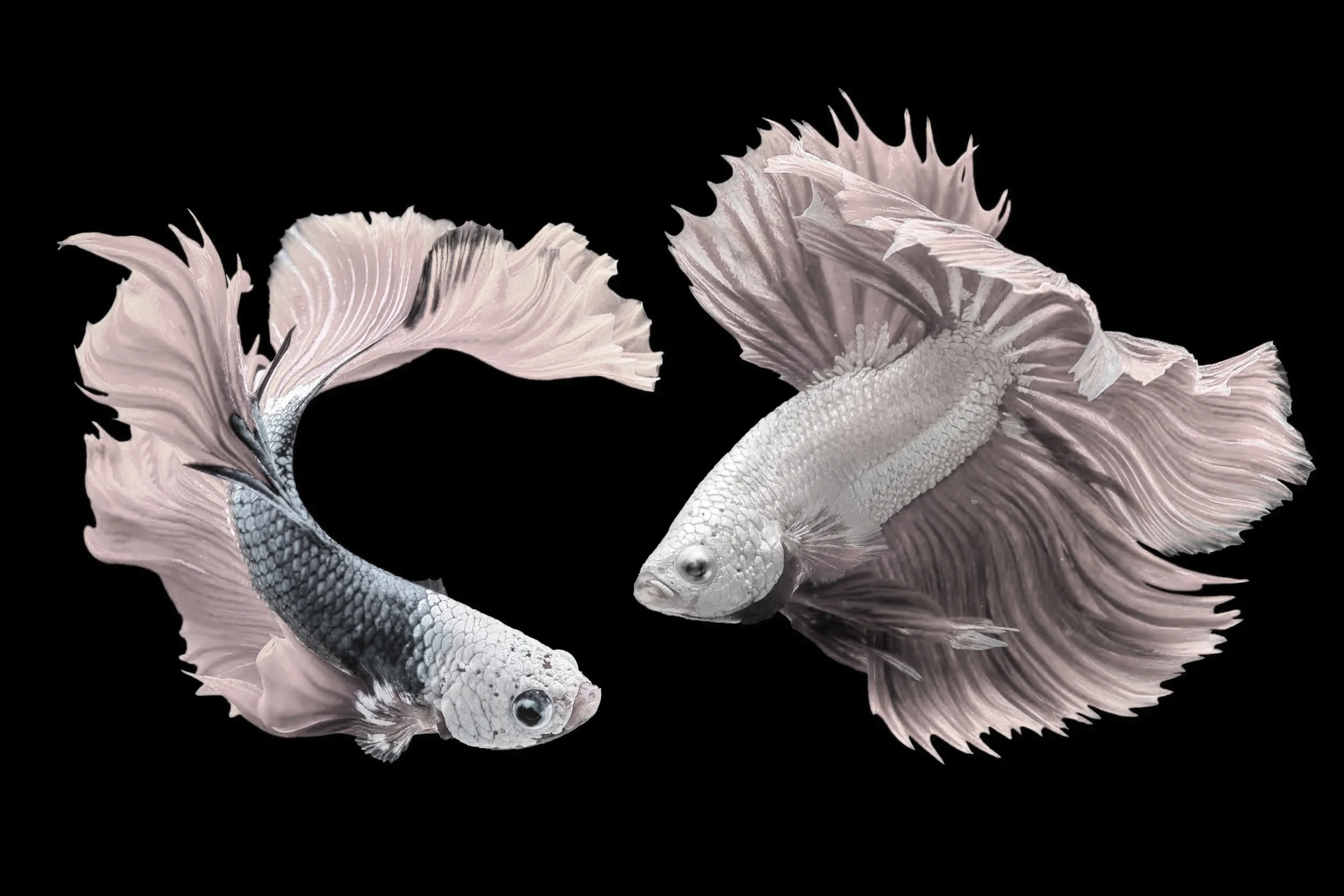
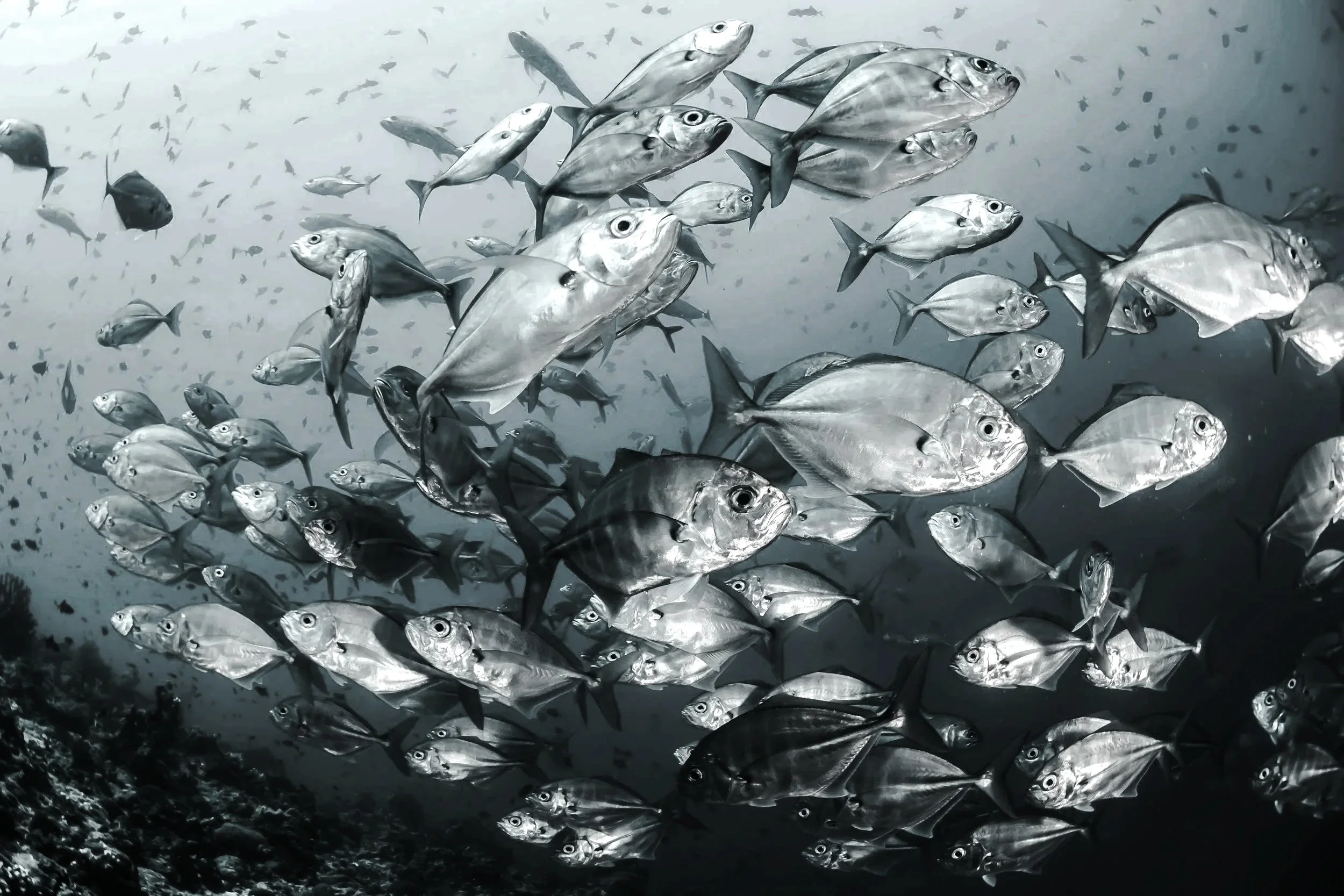
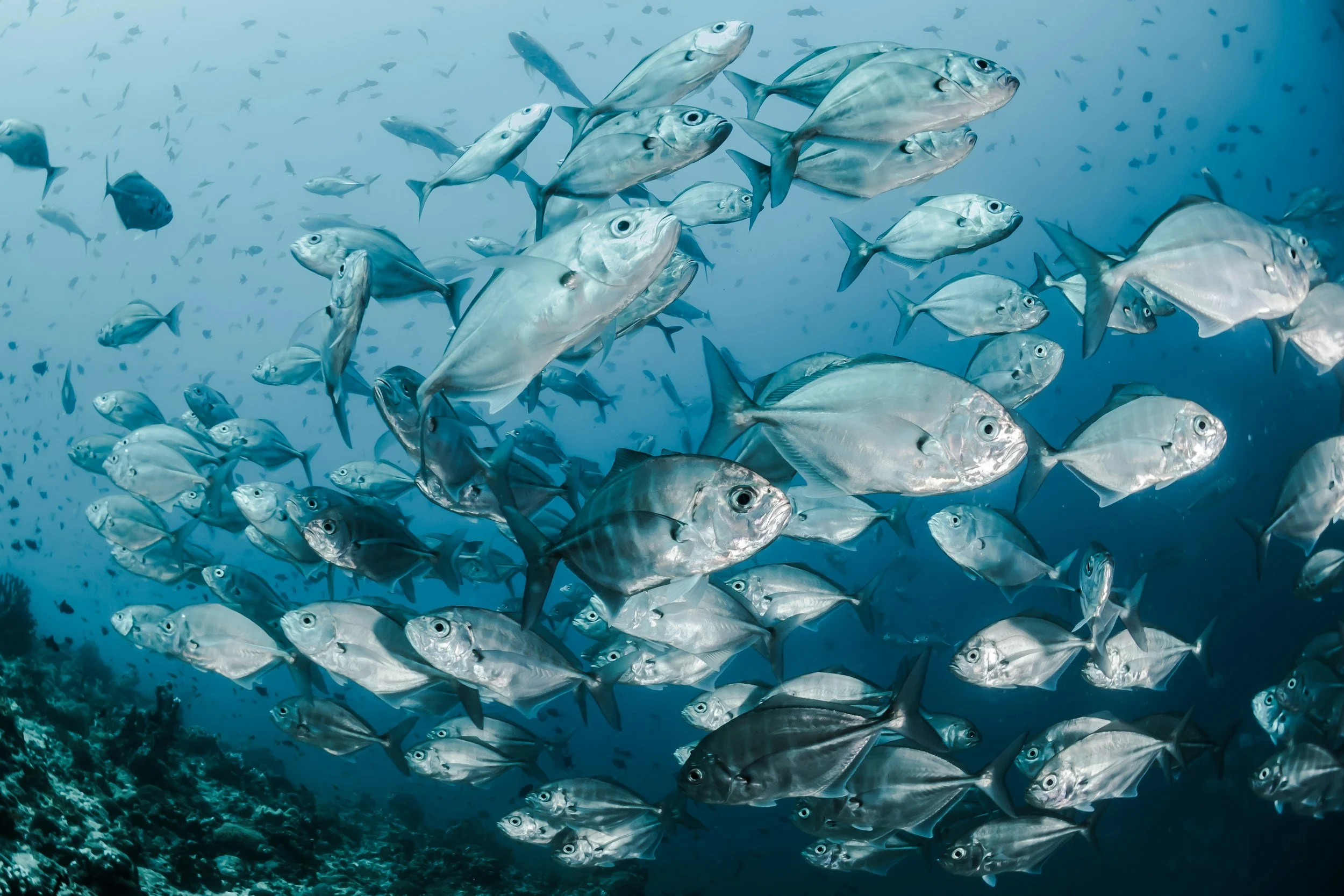
Fish are capable of experiencing stress and anxiety, and they also display play-like behaviors.
-
Contrary to the common misconception that fish have only a “three-second memory,” research shows that some species can
remember complex routes and locations for months,
engage in cooperative behavior, and
recognize individual conspecifics.
-
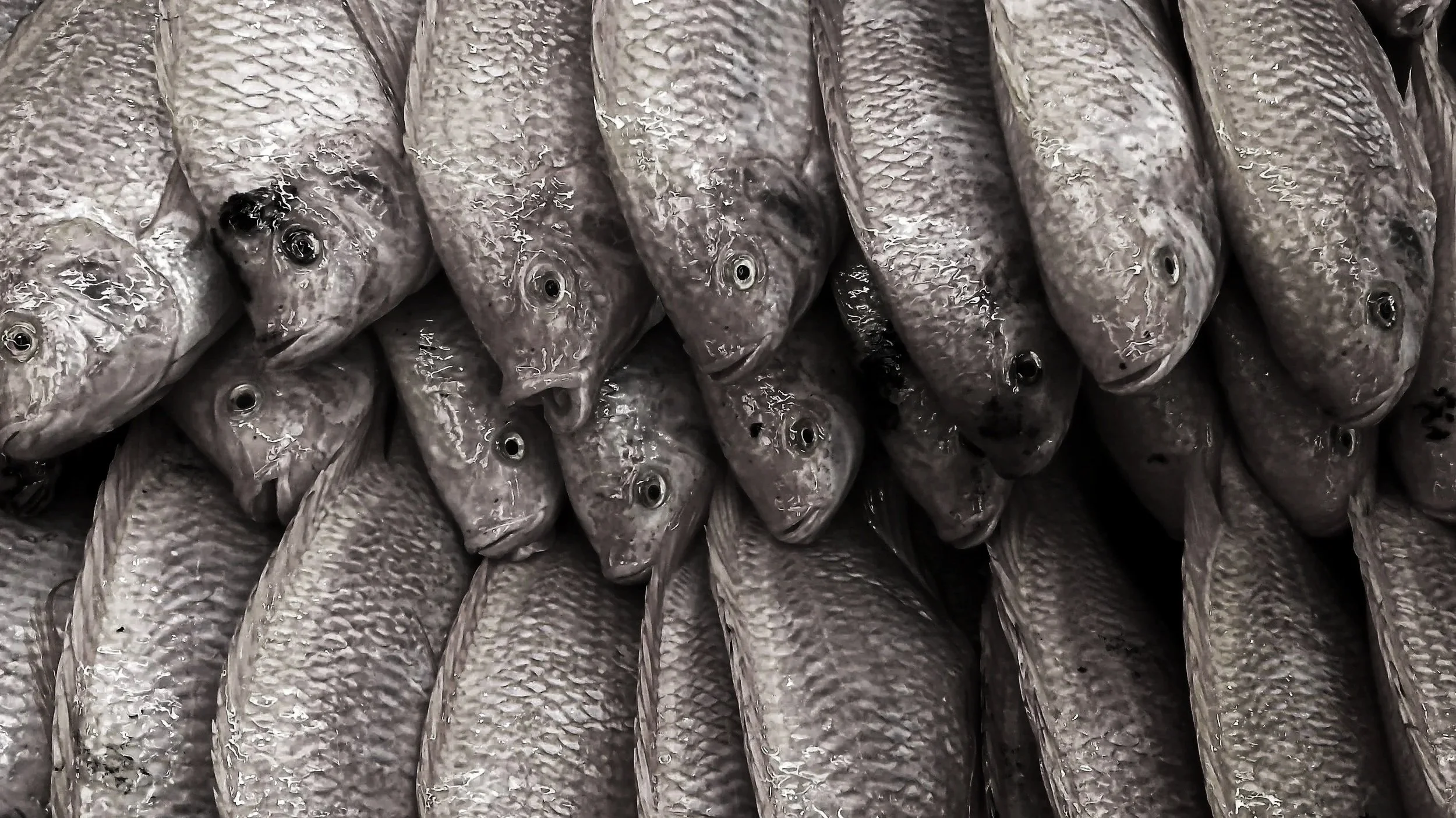
Fish possess peripheral nociceptors that detect noxious stimuli that allows them to respond to pain with physiological and behavioral changes while also learning to avoid and remember aversive experiences.
WHY FISH?
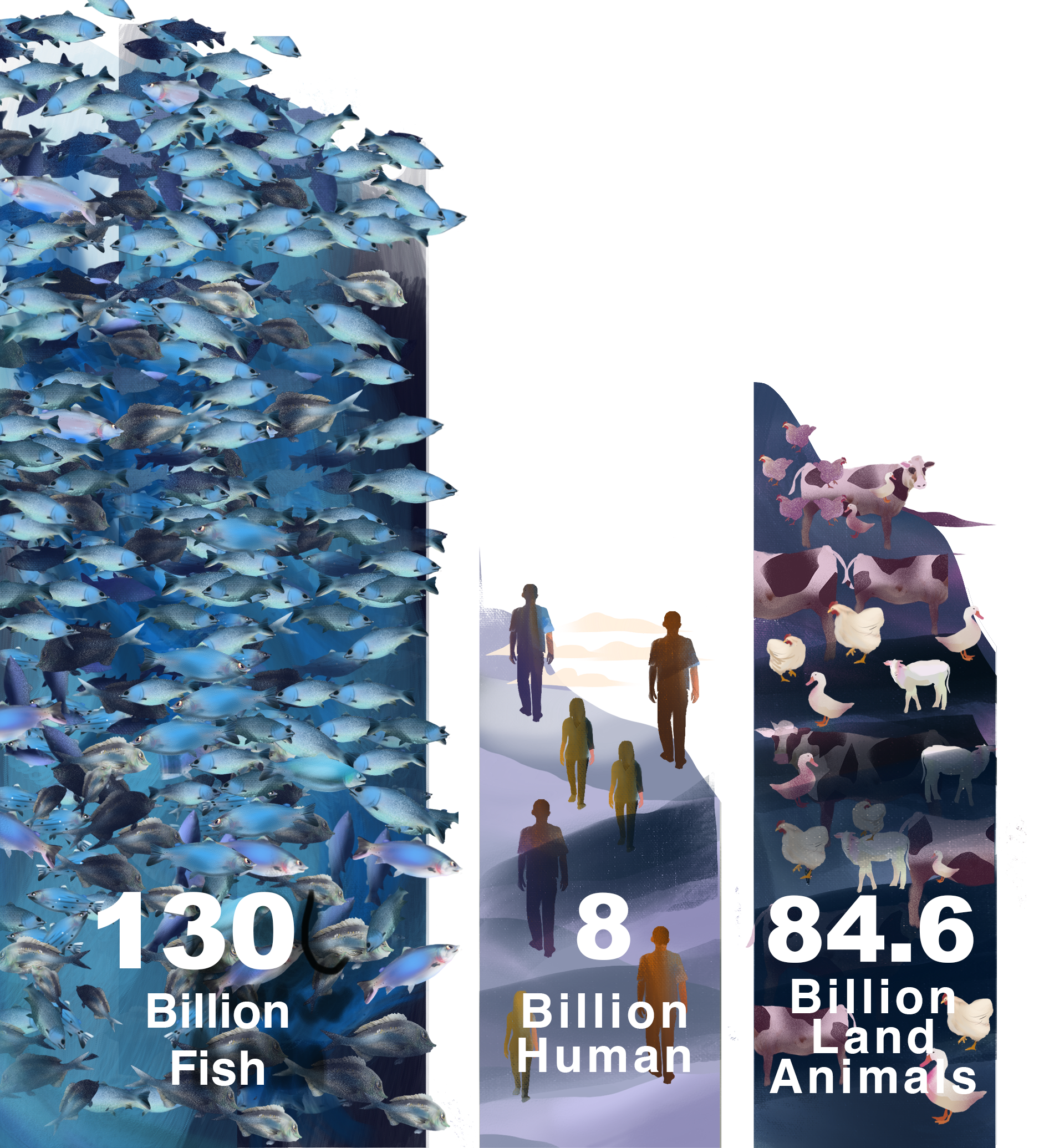
Globally, an estimated 1.2–2.3 trillion fish are killed for food each year, including approximately 130 billion farmed fish. This figure is around 1.5 times higher than the total number of terrestrial animals killed annually on farms, and about 1.7 times higher than chickens alone. At the same time, the number of farmed fish killed each year is equivalent to roughly 16 times the world’s human population.
Fish Are Farmed More Than Any Other Vertebrate Animal
Globally, an estimated 1.2 to 2.3 trillion fish are killed for food each year, including approximately 130 billion farmed fish. At the same time, the number of farmed fish killed each year is equivalent to roughly 16 times the world’s human population.
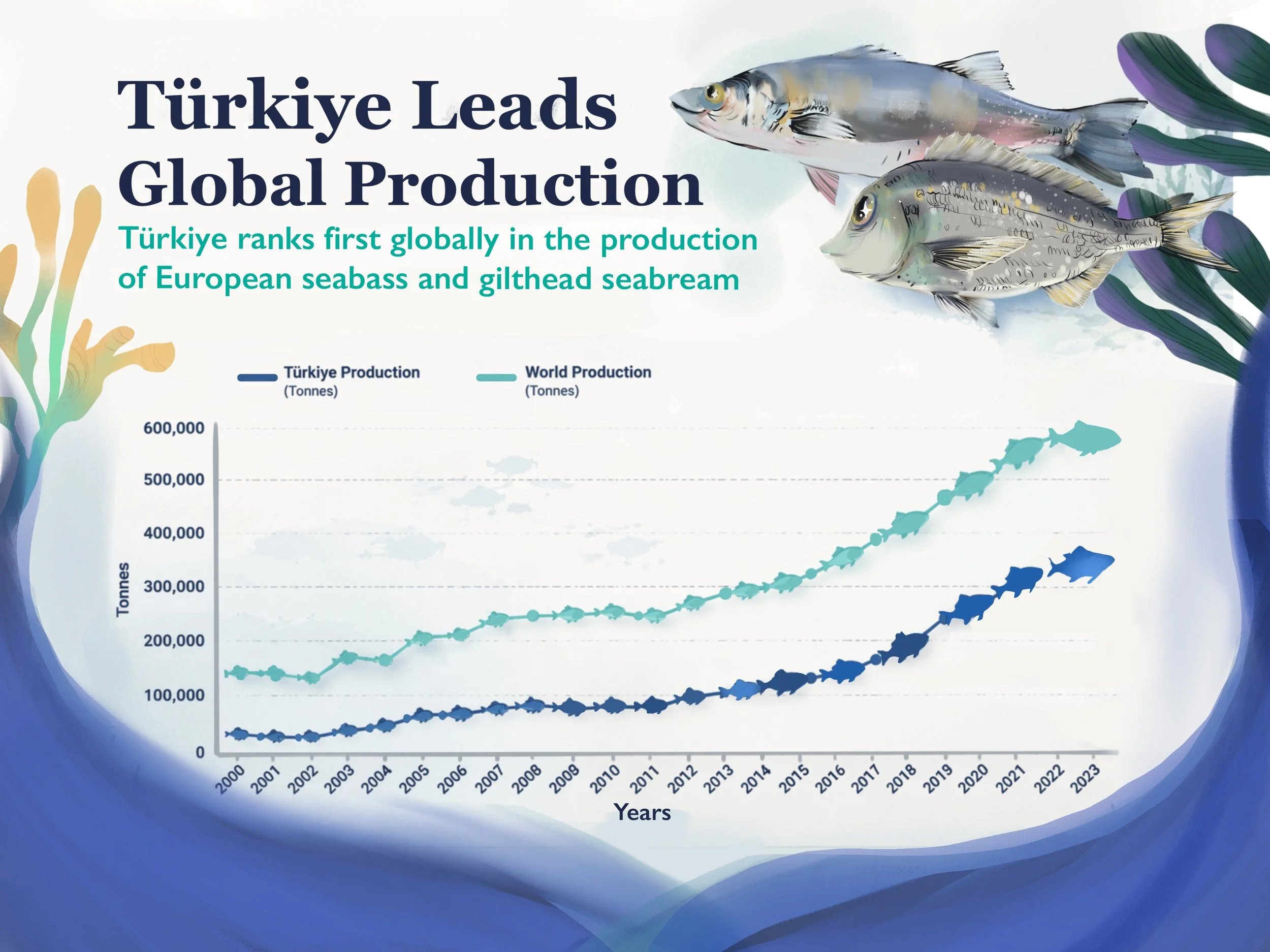
Turkey ranks first globally in the production of European seabass and gilthead seabream.
This leadership, driven by both high production volumes and the capacity to influence industry practices, positions Turkey as a critical actor in advancing fish welfare.
WHAT IS THE PROBLEM?
-
![A large school of fish, likely carp, swimming closely together in a body of water.]()
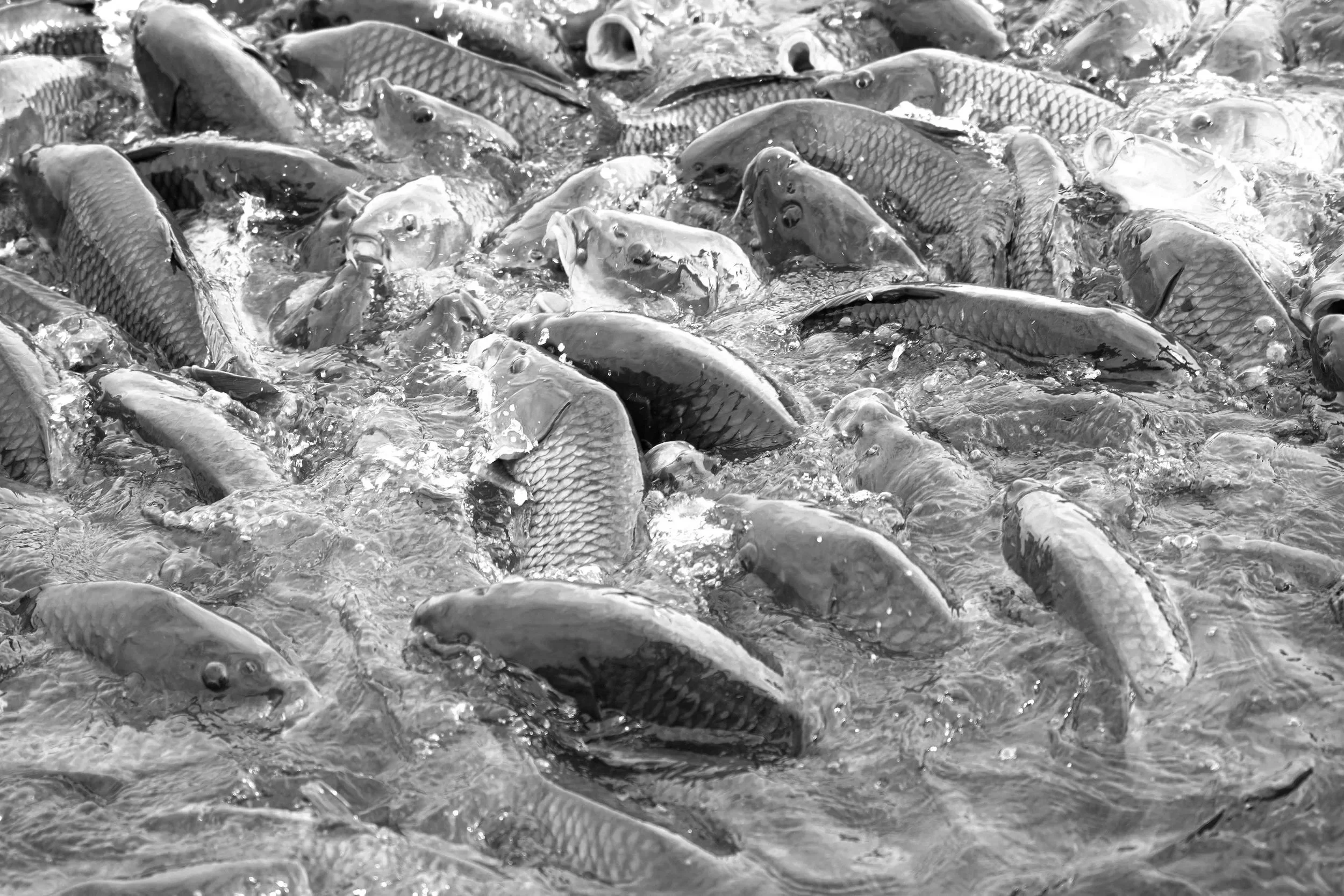
Stocking Density
Keeping too many fish in a confined space severely limits their ability to swim freely, reduces oxygen availability, and increases the risk of injury from frequent collisions.
Crowding elevates stress levels, often leading to aggressive behavior and harm among fish, which results in diseases spreading much more rapidly.
-
![A person wearing a glove holding a clear measuring beaker with liquid in it, in a laboratory setting.]()
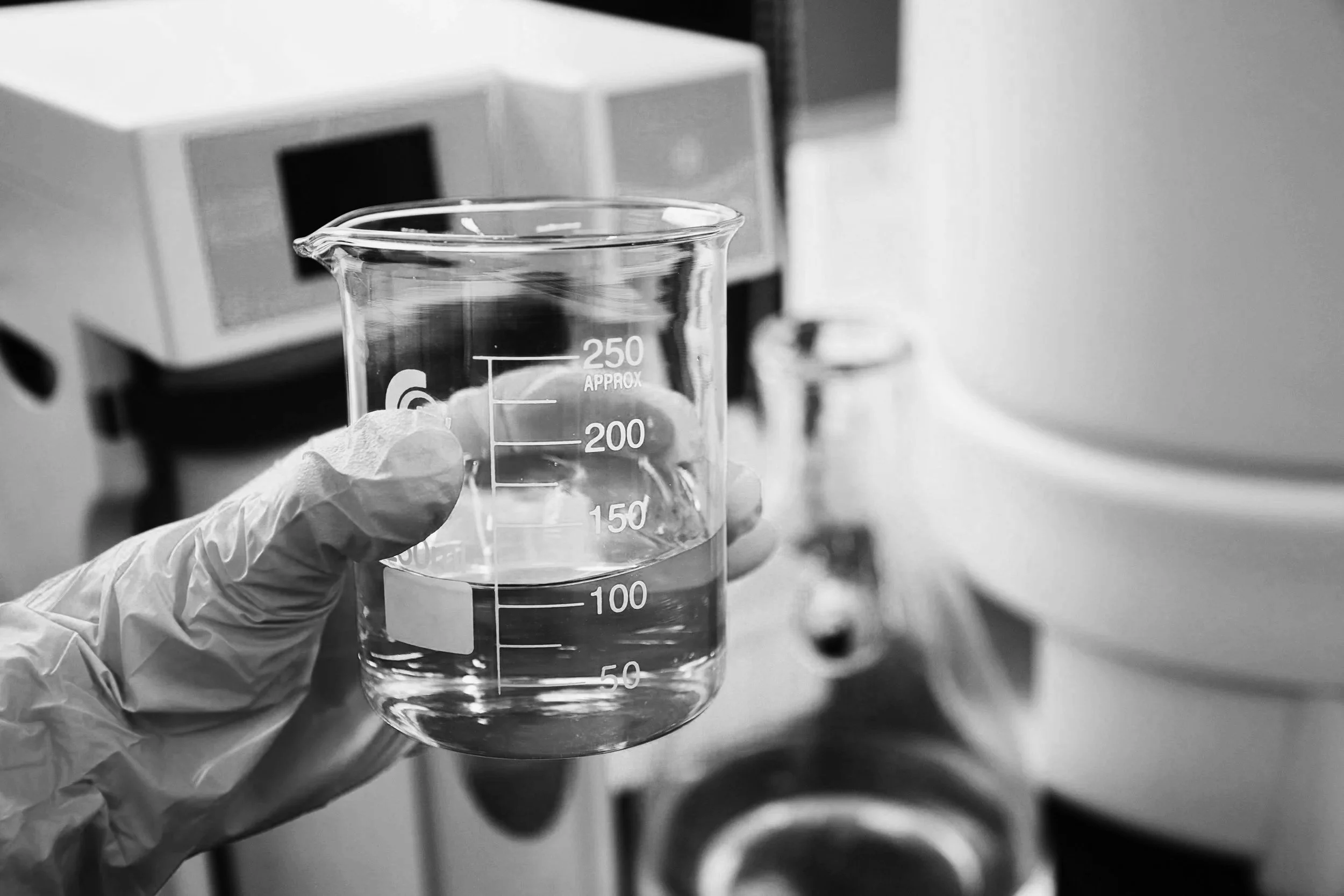
Water Quality
Declining oxygen levels make respiration more difficult, while increases in water temperature disrupt metabolic balance.
Changes in pH and other water parameters can push fish beyond their physiological and physiological limits.
-
![Black and white photo of three people working on a fishing net at the edge of a wooden pier, with a body of water, a bridge, and a ship in the distance.]()
Inadequate and Imbalanced Nutrition
Fish may sometimes be unable to access sufficient feed, or they may be fed diets that do not meet their species-specific nutritional requirements. Inadequate or imbalanced nutrition weakens the immune system and reduces resistance to disease.
Overfeeding, on the other hand, deteriorates water quality; polluted water creates favorable conditions for the rapid spread of disease.
-
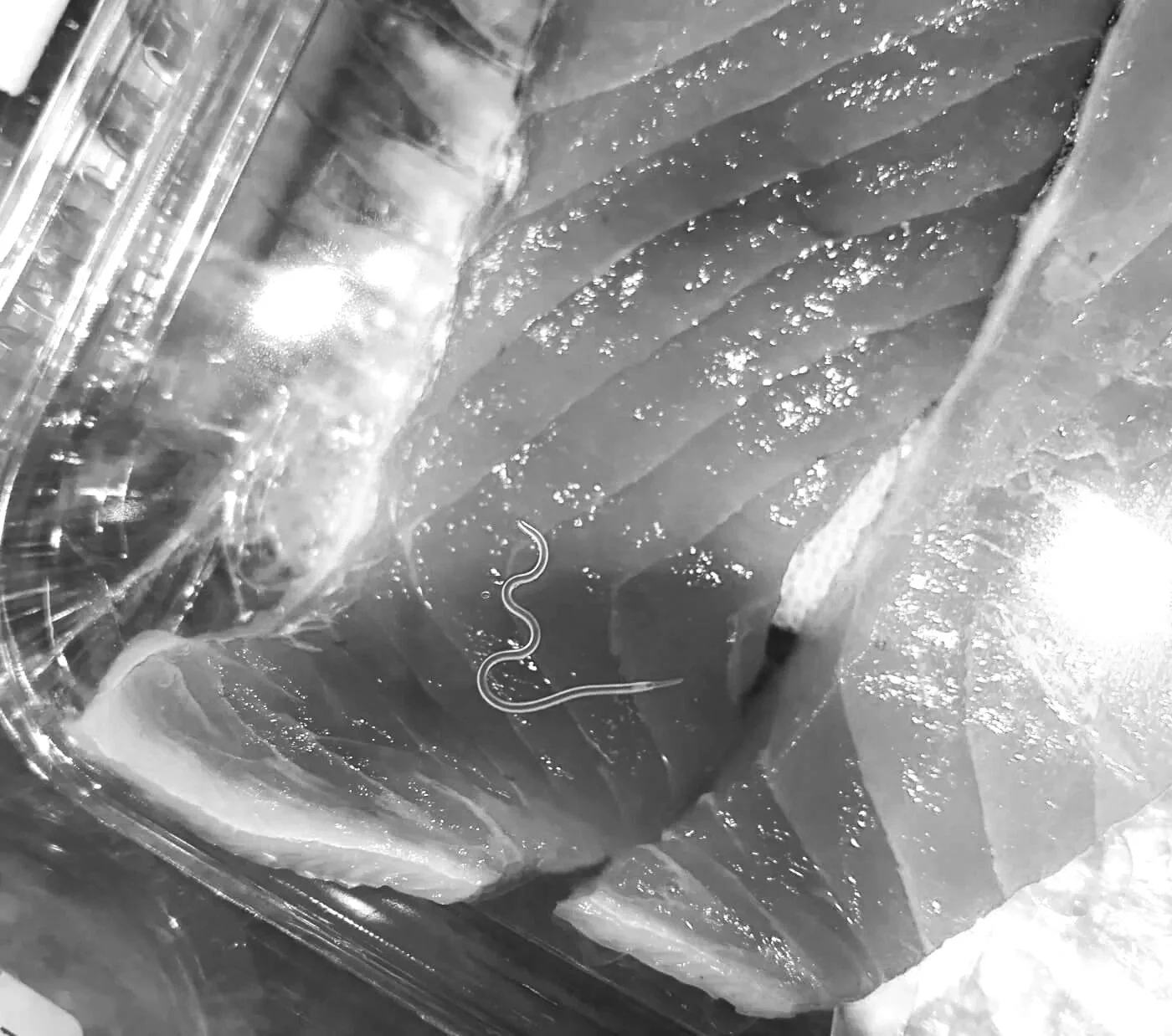
![A close-up black-and-white photo of a plastic bag containing a long, slender worm or parasite.]()
Disease and Parasite Challenges
In intensive and closed aquaculture systems, fish become significantly more vulnerable to diseases and parasites. An infection that begins in a single fish can quickly spread throughout the entire stock.
As chronic stress weakens the immune system, fish lose their capacity to cope with disease, resulting in prolonged suffering and a substantial decline in overall welfare and quality of life.
-
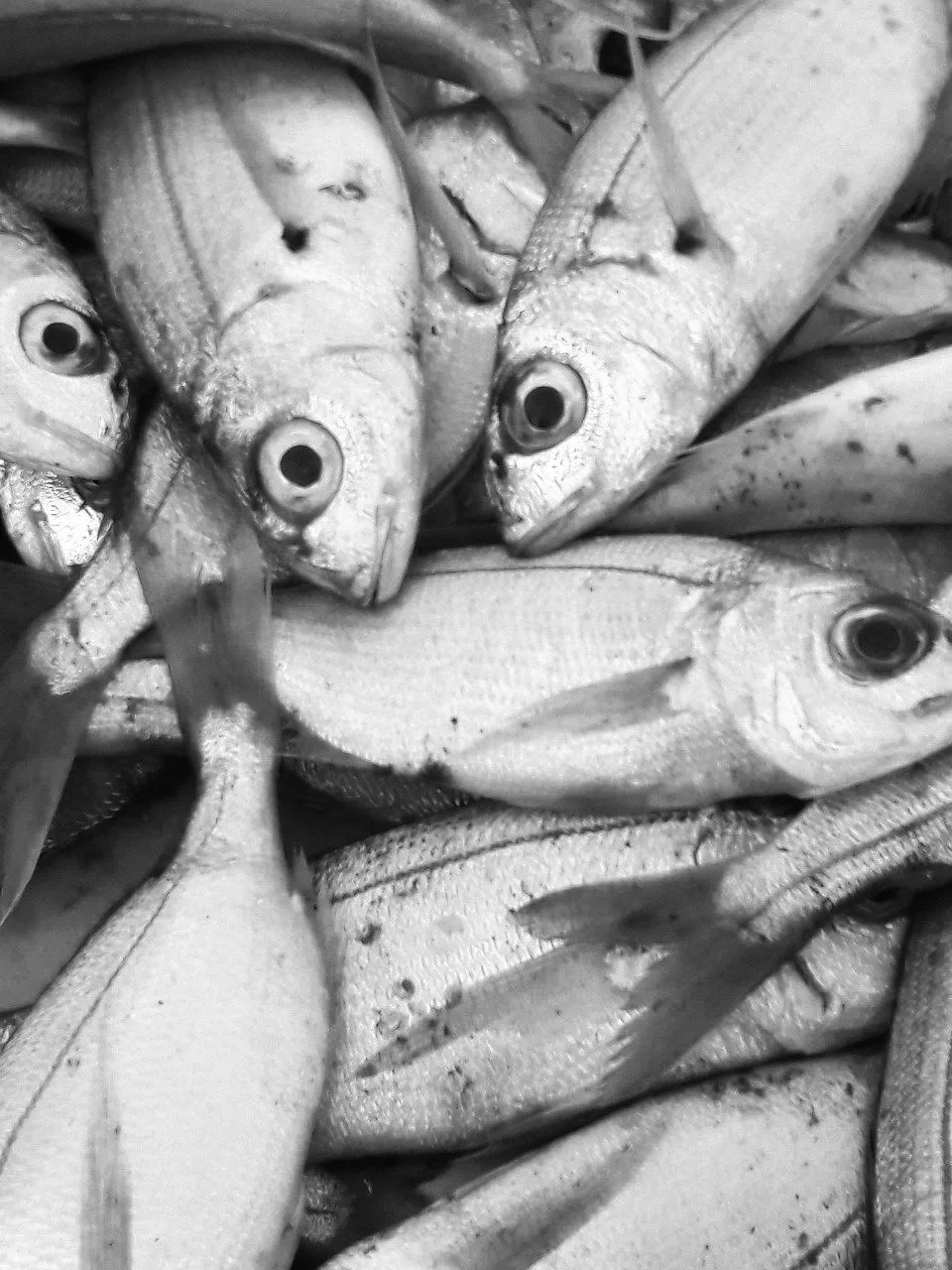
![Several fish with large eyes piled together.]()
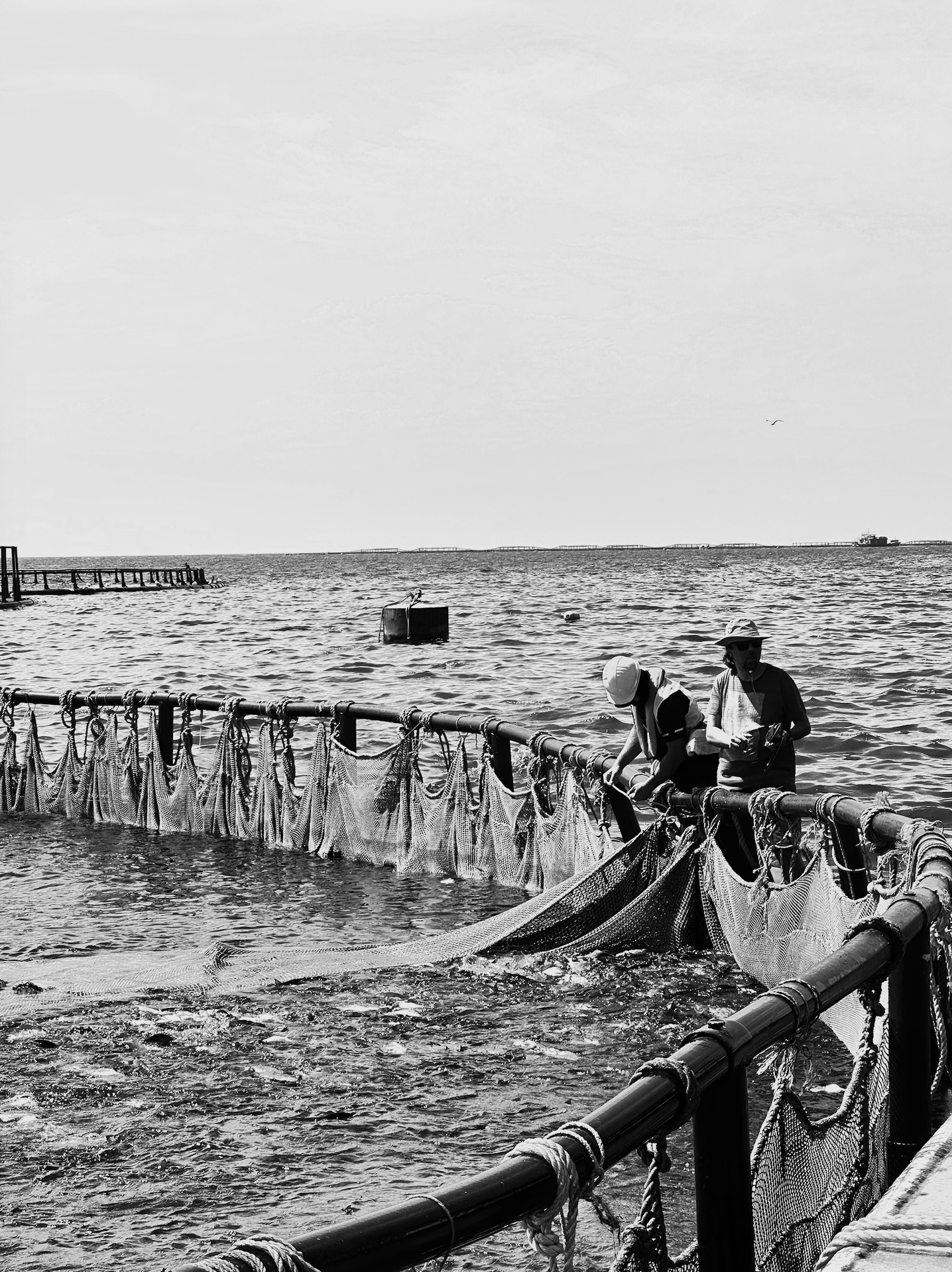
Transport and Handling
Transport includes the processes in which fish are sorted, transferred, or moved between cages, facilities, or sites prior to harvest. During these stages, fish are collected using nets, crowded into confined spaces, and transported in tanks or vessels.
Crowding, sudden changes in water conditions, and insufficient oxygen can lead to injuries and severe stress. -
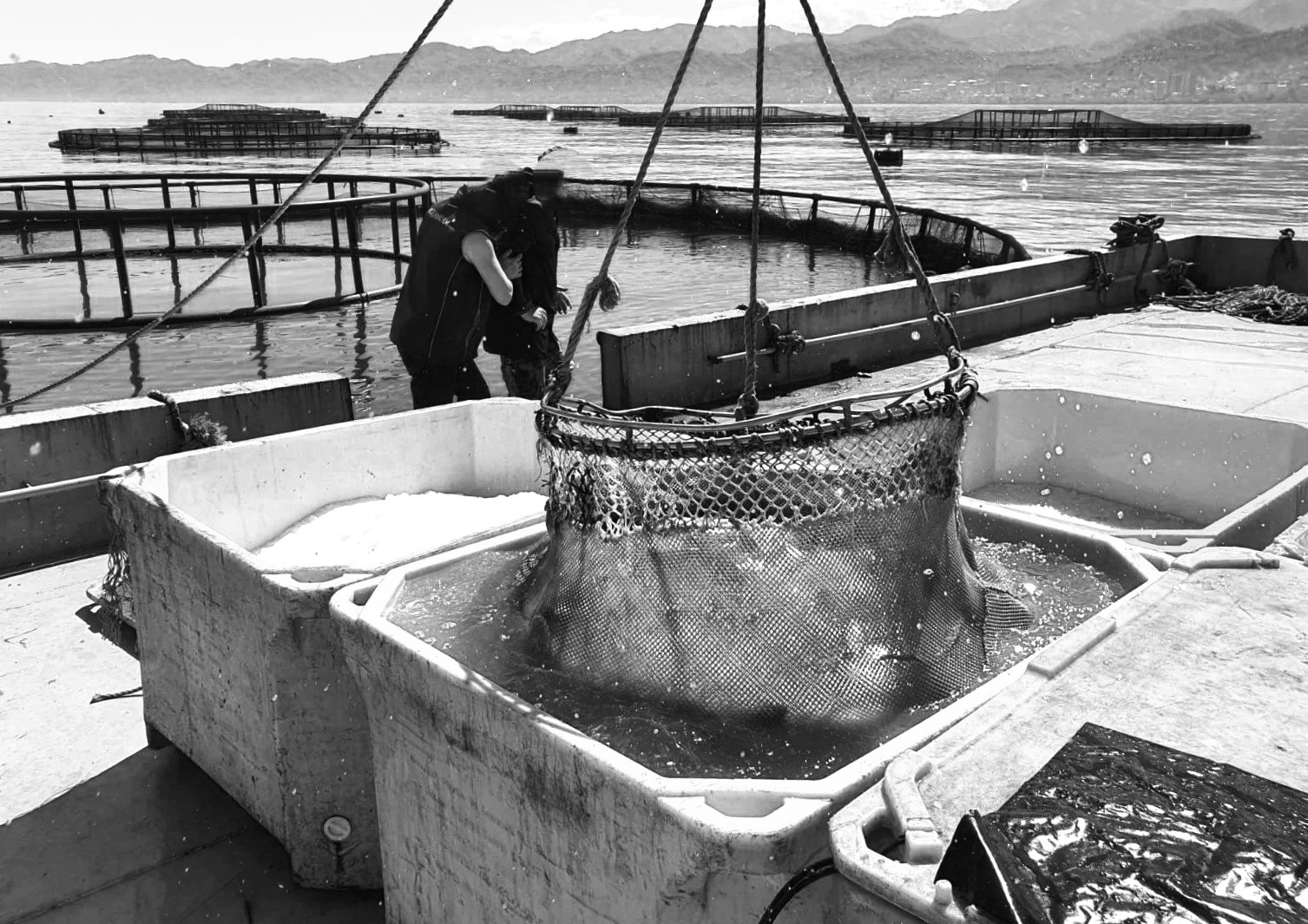
![Two people are working on a dock near water, handling a large net in a tank. In the background, there are circular fish farms floating on the water with a mountainous landscape in the distance.]()
Prolonged Asphyxiation and Stress During Harvest
When fish are not rendered unconscious rapidly during harvest, practices such as carbon dioxide exposure, gill cutting while conscious, or asphyxiation in air or ice can cause intense stress and prolonged suffering. Studies report that European seabass and gilthead seabream can remain alive for up to two hours during asphyxiation in air, meaning they may experience distress for an extended period before death.
OUR WORK
Scientific Research
To strengthen fish welfare standards, we conduct pioneering field-based research in Turkey. We share our findings with industry stakeholders and the academic community in a way that can directly contribute to improving the living conditions of fish.
We carried out the first field study to examine the effects of electrical stunning systems on European seabass and gilthead seabream. After this study we also published the first comprehensive report on the state of fish welfare in Turkey.
One of our core objectives is to expand this body of research and contribute to the literature on fish welfare.
Corporate Commitments
To promote the adoption of fish welfare standards, we engage with a wide range of institutions and companies, including producers, retailers, restaurants, and hotels.
We incentivise companies to adopt public, measurable commitments to implement fish welfare standards and practices.
To date, six companies have taken the lead in this transition by publicly committing to meet fish welfare standards.
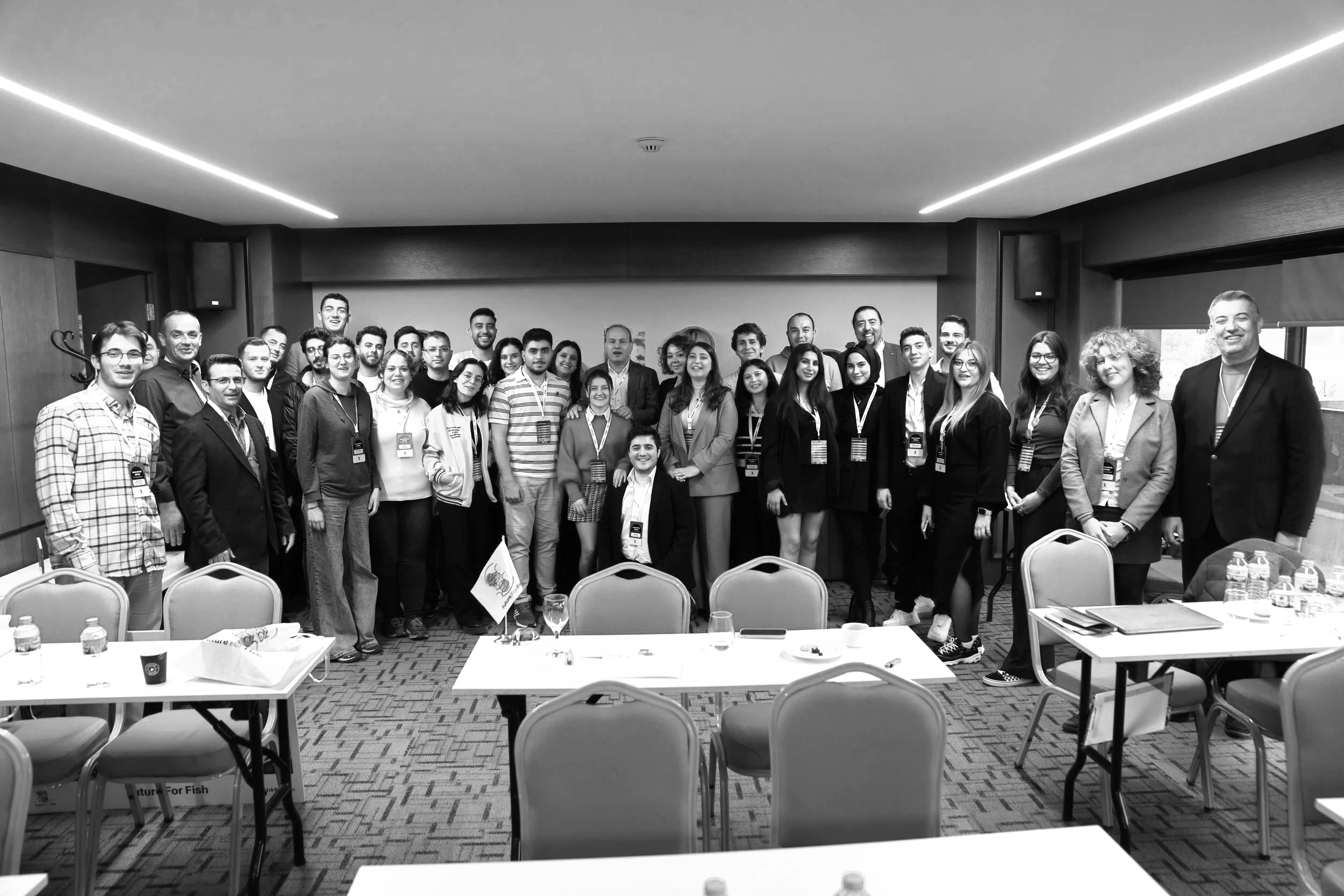
Trainings
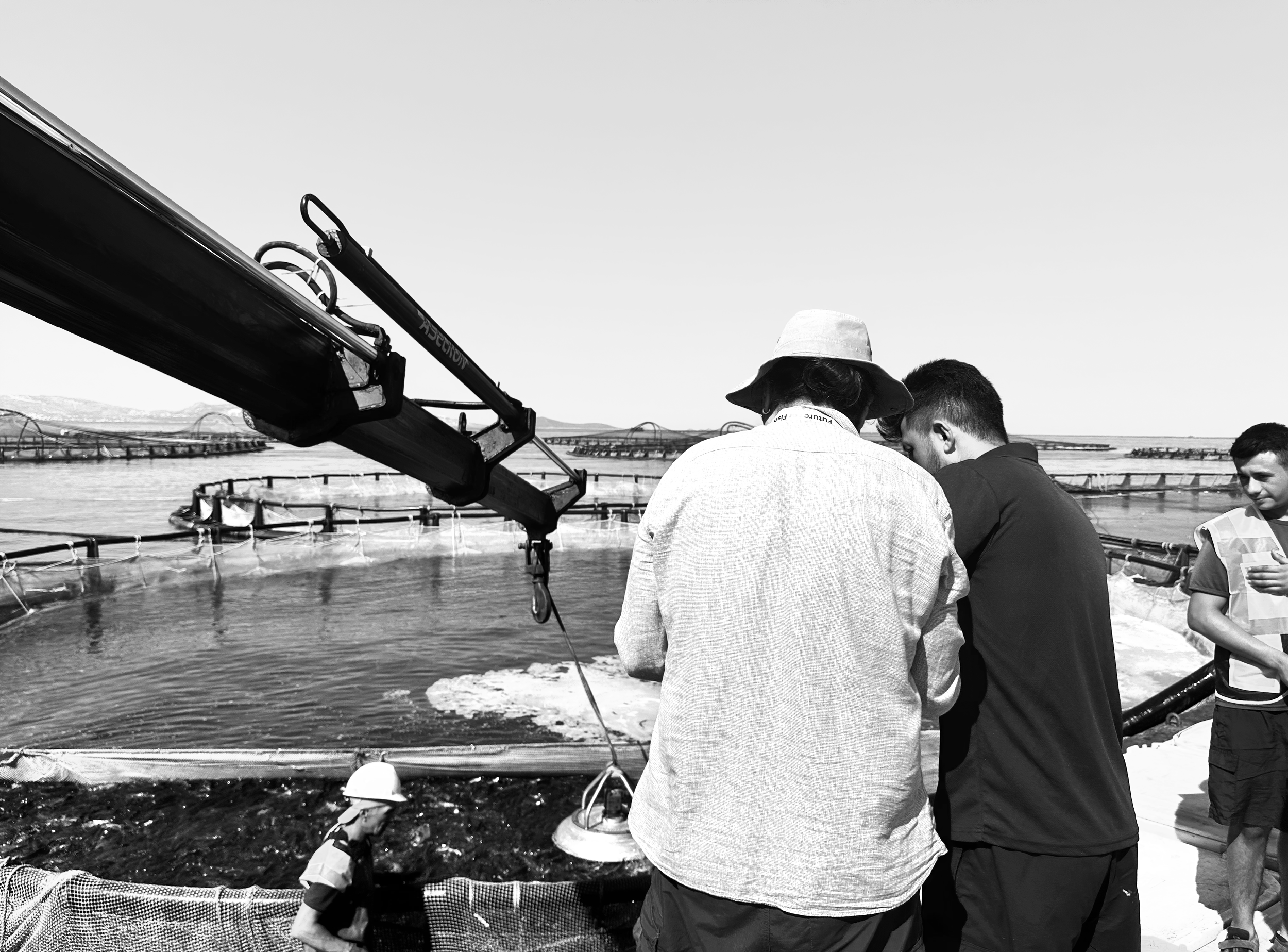
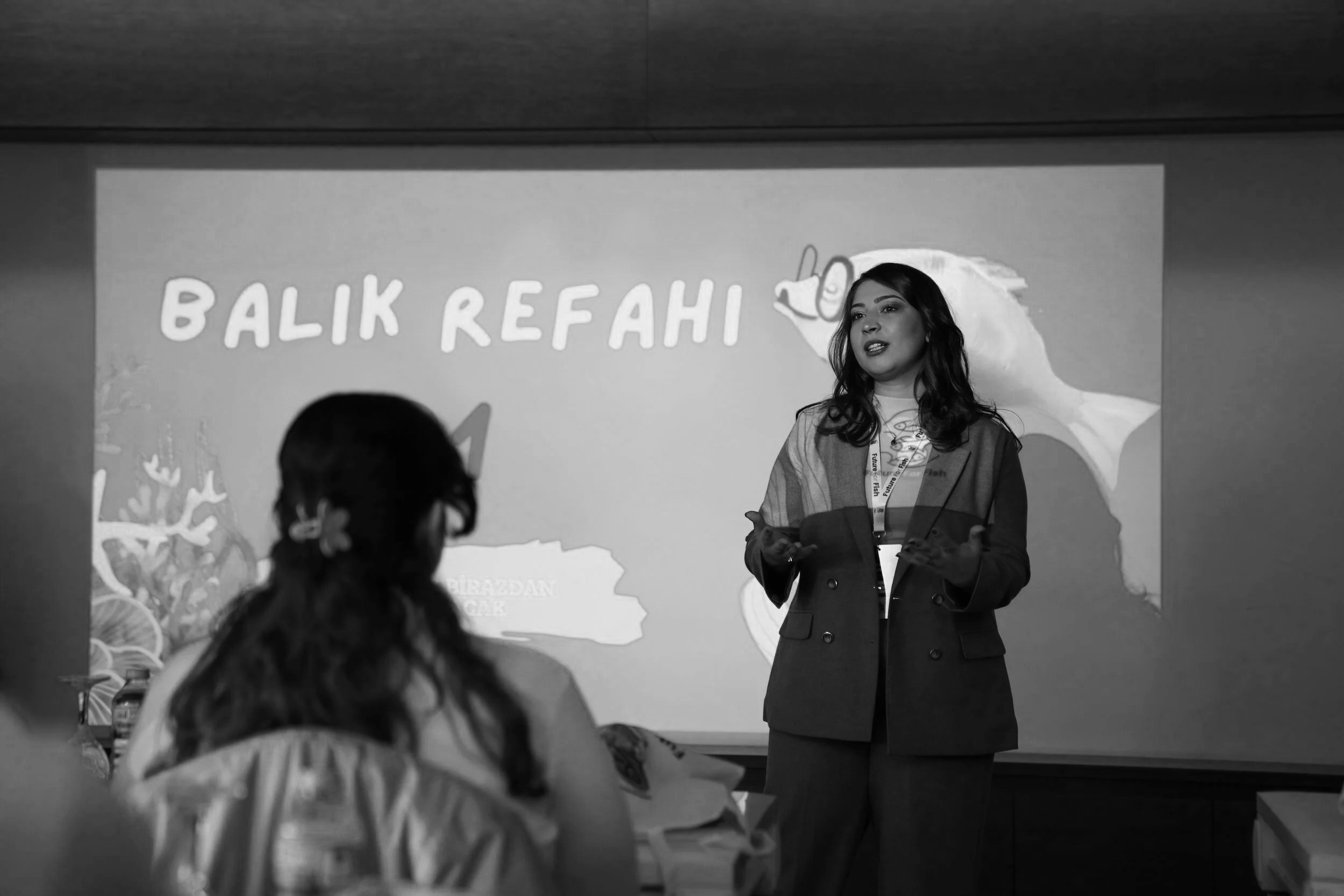
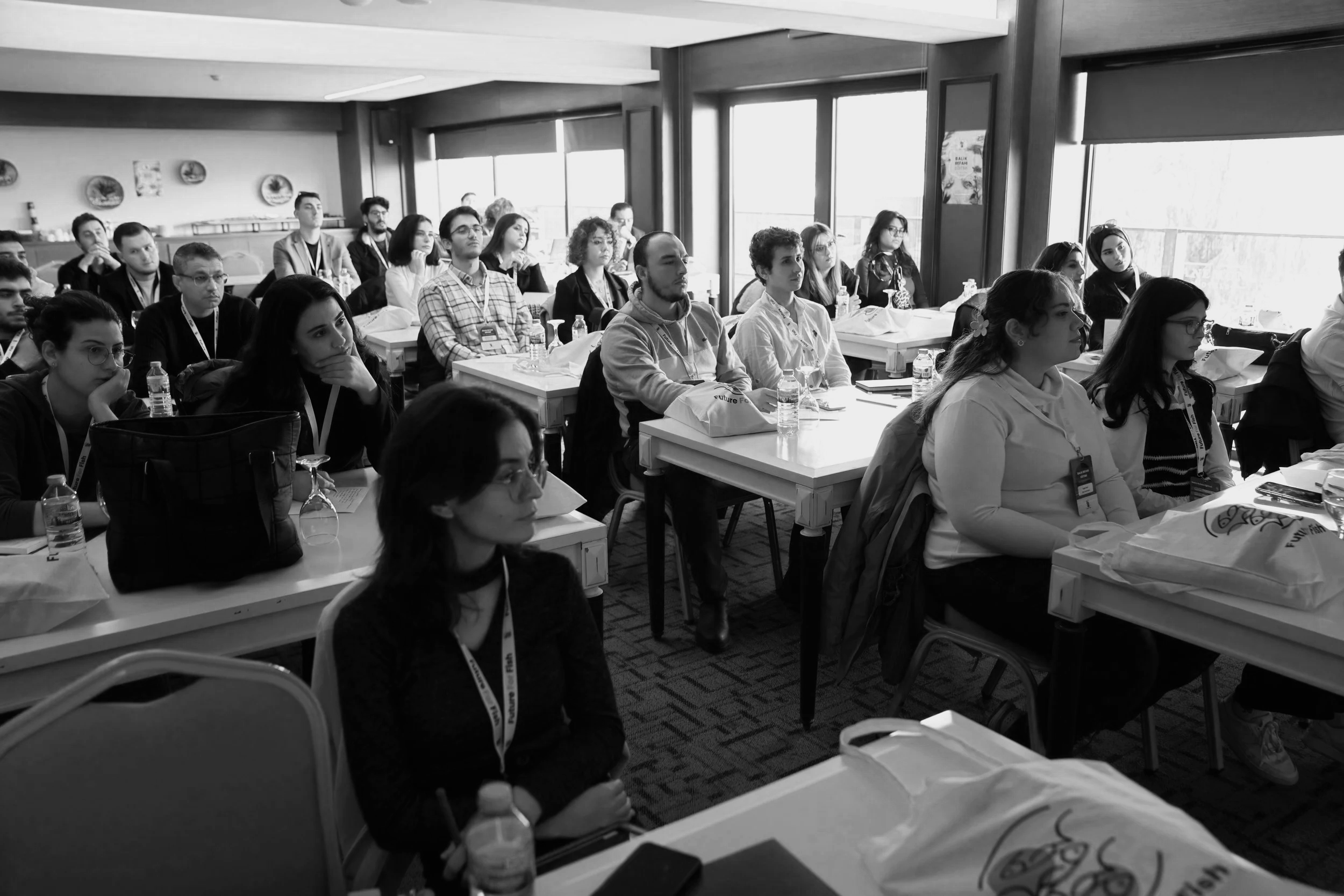
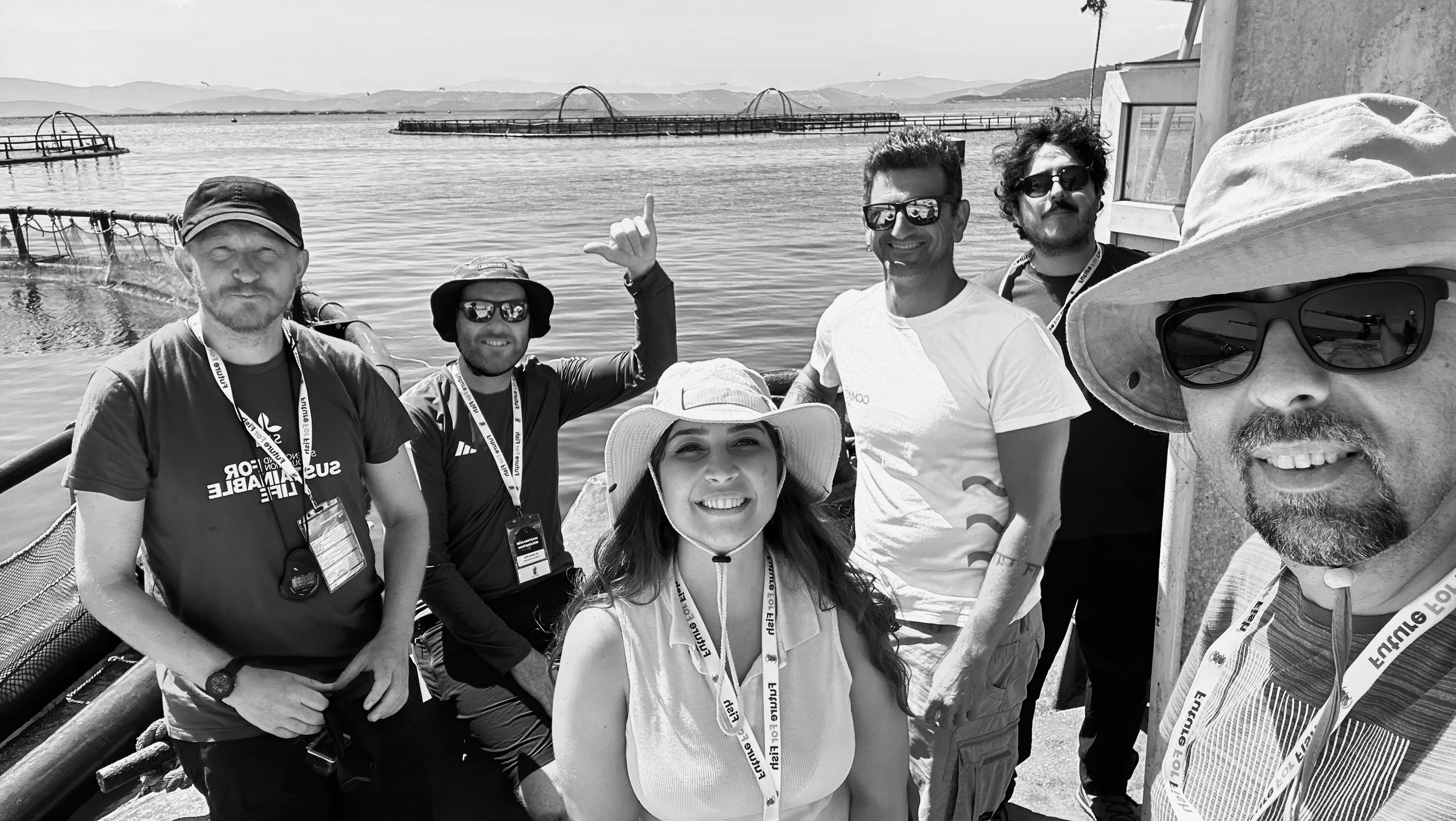
To advance fish welfare practices, we deliver training sessions and organise fieldwork for students, aquaculture engineers, and fish farm professionals.
Our aim is to strengthen their understanding of the scientific foundations of fish welfare and how these can be applied in real-world production settings.
Events
To build meaningful connections and foster collaboration for fish welfare, we actively participate in global and local events, engaging with industry and academia.
OUR IMPACT
We work to turn fish welfare into a measurable and actionable part of aquaculture practices.
We have engaged with multiple producers, retailers, and hospitality companies, contributing to welfare improvements with the potential to impact millions of fish annually.
Through our work, we:
support companies in establishing and adopting clearer fish welfare standards across production and supply chains,
conduct and support practical research on key welfare challenges in Mediterranean aquaculture,
train students and professionals through programmes such as Türkiye’s first fish welfare training for aquaculture students, and
contribute to the adoption of more humane farming, handling, transport, and slaughter practices.
TAKE ACTION
So, what can we do together?
As academics, we invite you to collaborate on research and advance fish welfare through your knowledge and expertise.
As companies, you can contact us for free support in identifying improvements across your production processes to strengthen welfare standards on your farms.
As individuals, you can learn more and be part of this transition by sharing your questions and ideas with us.
Let’s work together for meaningful change in fish welfare.